

Enjoy the stunning hilltop towns and breathtaking coastal drives around Positano, Amalfi and Ravello.
Southern Italy’s famous coastline runs from Punta Campanella to Salerno and includes the picturesque hilltop towns of Positano, Amalfi and Ravello. Brave the narrow, winding coastal road and discover the hidden treasures of the terraced towns and villages along the way.

The Amalfi Coast remains an intriguing mix of sophistication and simplicity. A mere seagull’s spit from the super yachts, chauffeur-driven Mercedes-Benz and five-star hotels, another more rural reality exists. Around precariously stacked hill villages, farmers still cultivate small plots of steeply terraced land, and their wives make cheese; down on the coast, tiny fishing communities make a living from the sea. The link between these worlds is Strada Statale 163 – the ‘road of 1,000 bends’ – commissioned by King Ferdinand II of Naples and completed in 1852. It hugs cliffs and deep gorges for 40km, slicing through lemon groves and whitewashed villages, rising and dipping above the shimmering sea. It is only ever wide enough for two lanes of traffic, with little room for manoeuvre, so traffic jams are unavoidable. And if you happen to be in an accident, well, as the Italians say with a resigned shrug… buona notte.

Explore the coastline along the 50km winding coast road from Sorrento to Salerno. In summer, when tourist-coach jams and the lack of anything resembling a parking space add to the chaos, it is often quicker to walk – and anyone without a head for heights is strongly advised to travel by boat (there is a regular summer service between Salerno, Amalfi, Positano and Capri).

Heading east towards the Amalfi coast from Salerno, you will leave the built-up port area, and head leisurely past the town of Vietri and its ceramic workshops to the coast proper. The approach from the west, on the other hand, drops immediately into the most spectacular scenery, looping from Meta – just before Sorrento – up to the Colli di San Pietro and down again towards Positano, with dizzying views of the spume below.

Take a boat from the quay at Positano and visit the Grotta delle Matera (which you can explore) and the pretty, disconcertingly named cove Marina di Crapolla, with Roman-villa ruins on the beach. Also stop at the three small islands known as Li Galli (literally meaning the cockerels), believed by the Ancients to be home to the Sirens, whose song so enthralled passing mariners that they went weak at the knees and allowed their ships to drift onto the rocks.
The big tourist-pull along the rugged stretch of coast between Positano and Amalfi is the Grotta dello Smeraldo, a swimming spot accessible by boat (frequent tours from Amalfi and Positano) or from a car park on the road above.

Visit the Duomo in Amalfi. Most of its prize pieces are displayed in the Cappella del Crocefisso. You get to it via the exquisite 13th-century cloister Chiostro del Paradiso, with its interlaced Moorish arches, which flanks the Duomo. In the square outside, the Bar Francese is a good place to sit and muse on the passing of empires with a cappuccino and a copy of The Duchess of Malfi.

The Duomo of Ravello is equally impressive with its bronze doors and the two exquisite marble pulpits that face each other across the nave, adorned with mosaics; there is also a good museum in the crypt. But most people visit Ravello for its two famous villas, the Villa Rufolo and the Villa Cimbrone, which is now a hotel.
Positano had a brief moment of glory in the 12th and 13th centuries when its merchant fleet gave Amalfi a run for its money, but centuries of decline forced three-quarters of the population to emigrate to the USA in the mid-1800s. When John Steinbeck arrived in 1953 to write his famous article for Harper’s Bazaar, he found a pretty little fishing village known only to a few, mostly Italian, cognoscenti. But the cat was out of the bag and the dolce vita jet set moved in, big time, in the 1960s. Described by Paul Klee as ‘the only place in the world conceived on a vertical rather than a horizontal axis’, Positano is home to just short of 4,000 souls, although in summer thousands more pile in daily from Sorrento, Capri, Ischia and Naples.

But in spite of the crowds, Positano remains utterly beguiling. You don’t come to Positano to see the sights; there aren’t any to speak of. You come to drink in the matchless views along with your Campari, to shop for flowing linen and handmade sandals, or simply to watch the passing parade of tanned women in gold sandals and immaculately groomed men in pastel shades, cashmere sweaters draped over their shoulders. The only street level is the beachside walk, or at least it feels that way: just about anywhere else you go will involve lots and lots of very steep steps. There’s always a buzz down here on the grey-shingle Marina Grande, where restaurants, bars and tall pines line the curve of sand. In summer, the serried ranks of sunbeds fill up quickly; for the best swimming, take a boat to explore the many small coves up and down the coast, a trip that can easily be combined with a stop-off for lunch at Da Adolfo beach shack on Laurito Beach. Book a table and wait on the jetty for the gozzo with the red fish on its mast to come and pick you up.

For spectacular snorkelling in crystal-clear water, head to Li Galli, the archipelago of three tiny, jagged islands just off the Amalfi Coast where, according to Greek mythology, the Sirens (or Sirenuse) attempted to lure Odysseus to his death on the rocks. Odysseus may have resisted, but Rudolf Nureyev was less successful: he made the largest island his home for the last years of his life. Hotels will arrange the trip (in their private boat if you’re staying at the right place), or you can talk to one of the four Lucias at the Lucibello boat booth on the beach.
A few bends to the east along the Amalfi Coast road is low-key Praiano, which has a couple of very cool, rather new, rather fresh places to stay. There isn’t really a centre to the village (unless you count the busy Bar del Sole), but it has a huge church with a colourful dome, and a rocky beach, La Gavitella, at the bottom of 350-plus steps, where you can enjoy the last rays of the evening sun – bliss on this convoluted stretch of coast. To really understand the topography of the costiera here, you need to get down to sea level. You can pick up a boat in Positano or Amalfi, but you can also take a detour down to cute Marina di Praia (aka La Praia), a clutch of cottages and a small beach wedged between towering cliffs, where there’s a boat concession and a couple of simple restaurants to set you up for your trip. Heading west, you will eventually reach Punta Campanella, the wild, barren tip of the Sorrentine Peninsula and, beyond it, Capri.
But a gentle chug eastwards towards Amalfi takes you past some pretty impressive scenery. It’s liberating to be out on the water and there’s so much to take in that isn’t visible from the road: gorgeous villas suspended over the water; sea caves and grottoes tucked into folds in the cliffs; solid Saracen defence towers that speak of pirate raids and war; slivers of pebble beach begging you to stop for a quick dip; waterside restaurants perfect for lazy lunches. The jagged coastline to the east of La Praia is broken by the Vallone di Furore gorge, which shelters at its mouth a few ancient fishermen’s huts hewn from the rock face and a tiny scrap of beach. Further on is the Grotta dello Smeraldo (you’ll know you’re there from the tourist boats swarming around it), named after the intense, greenish light that filters into the cave from an underwater arch.

Just beyond the Capo di Conca headland lies the pretty fishing village of Marina di Conca, with a handful of restored fishermen’s houses, a couple of restaurants and a tiny, whitewashed chapel, all overlooking a shingle beach lapped by crystal-clear water. Back up on Strada Statale 163 (SS163), a towering viaduct crosses the Vallone di Furore, giving a bird’s-eye view of the fishing hamlet far below, and is a suitably vertiginous venue for the annual Mediterranean Cup High Diving Championship. In the hills directly above the gorge (to reach it you have to drive almost to Amalfi before doubling back) lies the little bohemian town of Furore. Beyond it is the fertile plain of Agerola, where soft-eyed, brown Agerolese cows provide milk for delicious cheeses such as the ovoid Provolone del Monaco and fior di latte Agerolese (cow’s-milk mozzarella). Apart from the dizzying views, there is a good reason for coming up here: a visit to Marisa Cuomo’s Gran Furor Divina Costiera winery, where Cuomo and her husband Andrea Ferraioli produce much-lauded DOC Costa d’Amalfi wines, rich with the tastes of sea and sun.
The lifeblood of Amalfi today is tourism, but between the ninth and 12th centuries it was a proud and glorious maritime republic with a population of 80,000, a rival to Venice, Pisa and Genoa. The Amalfitani learnt to make paper from Arab traders, producing bambagina, a thick, heavy parchment made from cotton and linen rags, and in the 18th century the steep, narrow Valle dei Mulini and surrounding area were clogged with paper mills. The hard sell in Amalfi these days is garish ceramics, neon-yellow limoncello in gimmicky bottles and the ubiquitous menu turistico. But it’s a very pretty little town with a fascinating history, in a spectacular setting wedged between the sea and the mountains, with several good restaurants and the wonderful Hotel Santa Caterina. And if you abandon the tourist-jammed main drag and climb up into the warren of narrow, tunnel-like side alleys and steep stairways, you will be catapulted back into the Middle Ages.
Life centres on the open-air salon of Piazza del Duomo, dominated by the flamboyant, striped façade of the Norman-Arab-style cathedral with its interlaced arches and a set of magnificent bronze doors cast in Constantinople in 1066. The best place to refuel and reflect is the charming old Pasticceria Pansa, whose delizie al limone, creamy cakes flavoured with local lemons, are legendary. Juicy Amalfi lemons make excellent limoncello, the local brew that will often be produced, homemade and straight from the freezer, at the end of a feast. To escape Amalfi’s crowds, take the stepped footpath that leads over the hill to Atrani, a fishing village with an atmospheric tangle of tightly packed buildings, tunnelled walkways and staircases and a brilliant trattoria, A’Paranza. If you are driving, you probably won’t even realise you’re in Atrani until it’s too late: the SS163 sweeps right over the top of it on a viaduct.

There’s a lot to be said for leaving the best until last, and for many Ravello is the jewel in the coastal crown. This ravishing town sits on a mountain buttress 350 metres above sea level, removed from the frantic hubbub below. If Positano is the glamour-puss of the costiera, Ravello is its refined, aristocratic cousin. Like Amalfi, the town used to be much larger and richer. Its once-elegant palazzi, secluded villas, dreamy gardens, magnificent views and romantic sense of faded glory have inspired a steady stream of A-list writers, artists and musicians since the days of the Grand Tour. Even now, once the tour groups have gone, there’s a real feeling of otherworldliness here, and you really should stay the night (there’s no shortage of excellent hotels). Most people come to Ravello to see its two magnificent garden estates.
In 1880 Richard Wagner famously drew inspiration for his opera Parsifal from the romantic garden of Villa Rufolo, restored in the mid-1800s by the Scotsman Francis Neville Reid. Another Brit, Lord Grimthorpe, bought Villa Cimbrone in 1904 and created an extravagant garden with dizzying views. The villa was a hangout for the Bloomsbury set in the 1920s and a love nest for Greta Garbo and the conductor Leopold Stokowski in the 1930s; it is now a hotel. Ravello is also home to the coast’s most beautiful church, the refreshingly spare 11th-century Duomo di Ravello, and its only distinguished example of contemporary architecture: Oscar Niemeyer’s futuristic New Energy Auditorium, a dazzlingly white, concrete-and-glass structure overlooking the Gulf of Salerno, designed to reflect the swell of the sea.

Just beyond Ravello, balanced on the opposite side of the Valle del Dragone, lies sleepy Scala. It is a real little charmer and was once an important outpost of the Amalfi Republic, evidence of which can still be found in its faded palazzi and disproportionately large 12th-century duomo. Steinbeck’s observation that ‘Positano bites deep; it is a dream place that isn’t quite real when you are there and becomes beckoningly real after you’ve gone’ could well be applied to the Amalfi Coast as a whole. In the height of summer, when sandwiched between two fume-belching coaches on the SS163, it’s tempting to dismiss the whole experience as being simply too much like hard work. But as the inimitable Gambardella sisters (doyennes of the Hotel Santa Caterina in Amalfi) point out: ‘There are bits of the old life left on the coast, but you have to know where to find them.’
Via: https://www.cntraveller.com/article/travel-guide-amalfi-coast
7 Days Itinerary from Naples (194 NM)Embark on an unforgettable voyage through the Tyrrhenian Sea, where dramatic coastlines, volcanic islands, and timeless Italian elegance blend into one extraordinary sailing experience. This 7 Days Sailing Itinerary from Naples will be an experience for a lifetime.
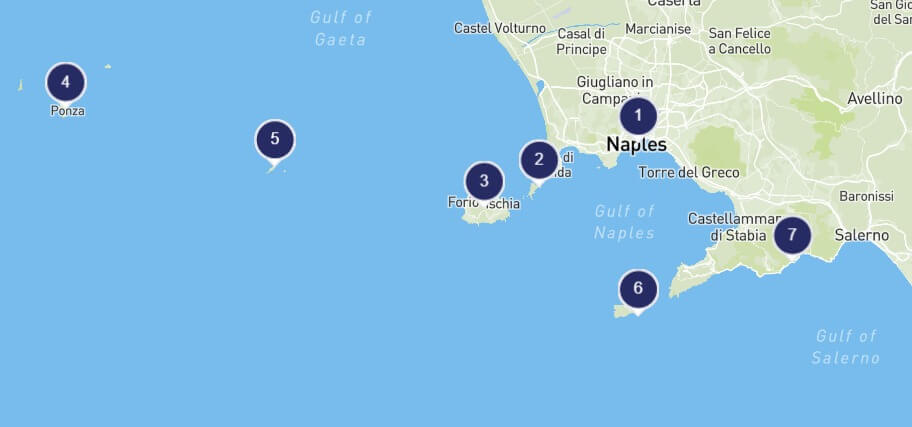
Your luxury catamaran becomes your private floating villa — glide across sapphire waters, anchor in secluded bays, explore historic villages ashore, and experience Italy from its most refined and authentic perspective.
Set sail from Naples, a city bursting with history, culture, and unmistakable Southern Italian energy, as the Tyrrhenian Sea opens before you.
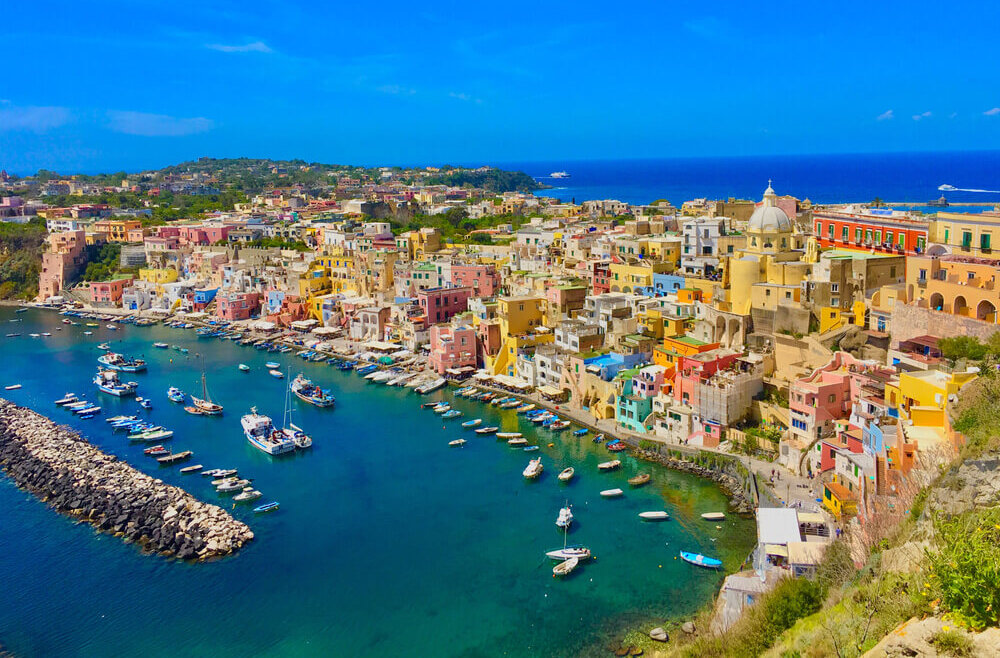
Secondly, cruise south toward Procida, Italy’s most authentic island, known for its pastel-colored houses and traditional fishing harbors. Anchor near Marina Corricella for a first swim and aperitivo on deck, as the sun sets over a postcard-perfect landscape. Enjoy a relaxed evening surrounded by color, calm, and the gentle rhythm of island life.
A short sail brings you to Ischia, the lush green island shaped by volcanic origins and famous for its thermal springs.
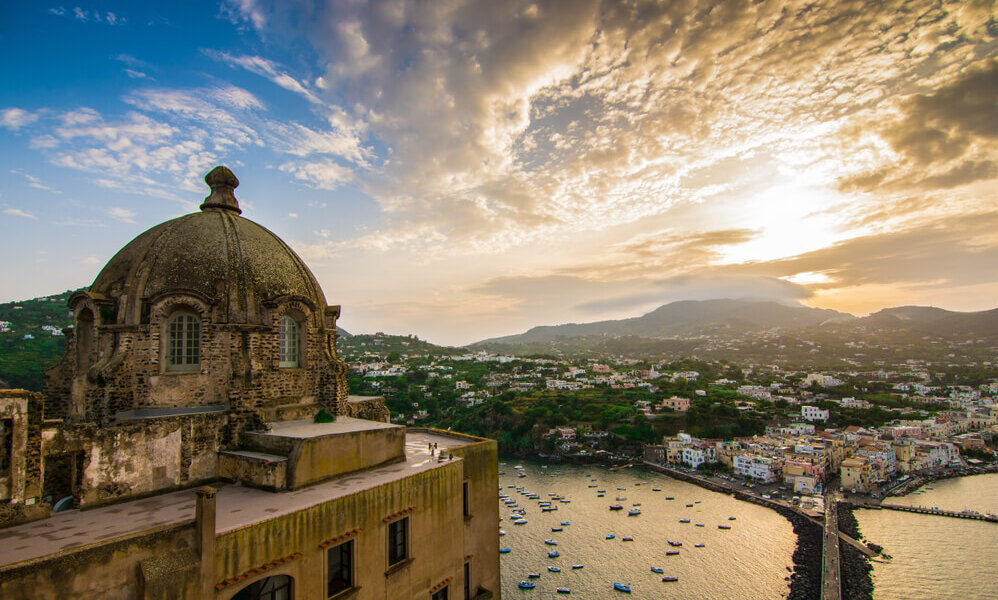
Discover hidden coves accessible only by sea, swim in crystal-clear waters, or relax in naturally warm bays. Visit the Aragonese Castle for panoramic Bay of Naples views, then enjoy a sunset aperitivo overlooking the island’s dramatic coastline.
Sail onward to Ponza, one of Italy’s most striking islands, celebrated for its turquoise waters, sculpted cliffs, and secluded bays.
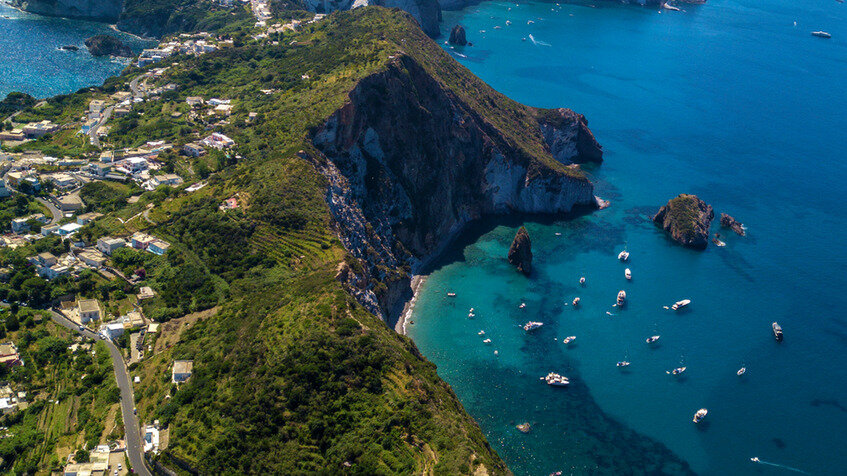
Anchor in breathtaking coves perfect for swimming, snorkeling, and exploring sea caves by tender. Ponza’s raw beauty and crystal-clear seas make it a journey highlight, best enjoyed with a quiet dinner onboard under the stars.
Arrive in Ventotene, a peaceful island steeped in Roman history and untouched by mass tourism. With no cars and a slow pace of life, the island offers complete tranquility.
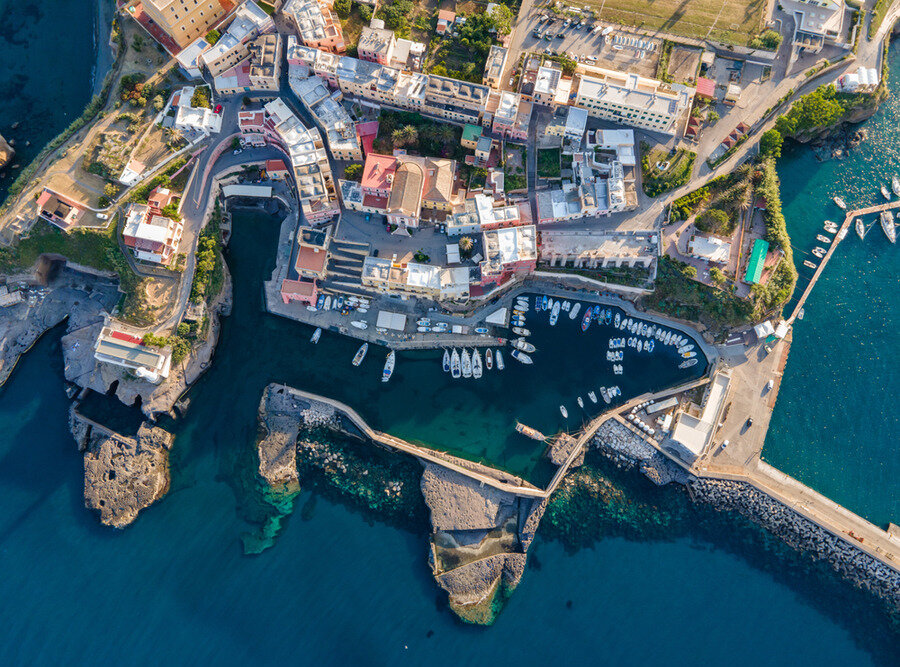
Swim in pristine waters, paddle along the coastline, or simply unwind on deck and embrace the sense of isolation and calm that defines this hidden gem of the Tyrrhenian.
Cruise south toward legendary Capri, the jewel of the Tyrrhenian Sea and a symbol of Mediterranean glamour.
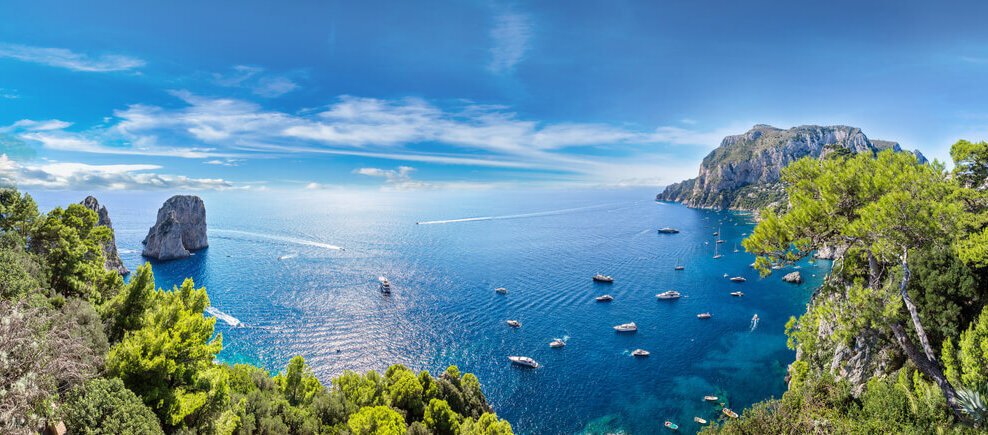
After, sail past the iconic Faraglioni rocks, anchor in blue waters, and explore sea caves carved into limestone cliffs. Ashore, discover elegant boutiques, cafés, and panoramic viewpoints before returning onboard for an evening of dramatic scenery and timeless elegance.
Sail along the Amalfi Coast, one of the most spectacular coastlines in the world.
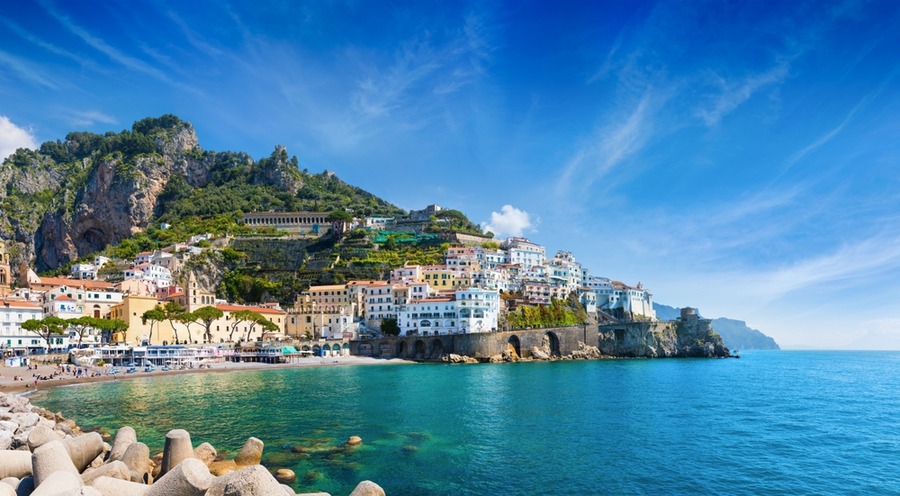
Choose to visit the historic town of Amalfi or anchor near the mythical Sirenuse islands for swimming and snorkeling in emerald waters.Steep cliffs, fragrant lemon groves, and dramatic landscapes create a truly magical day, blending natural beauty with centuries of history.
Enjoy a final morning at sea before cruising north along the Italian coastline toward Naples.
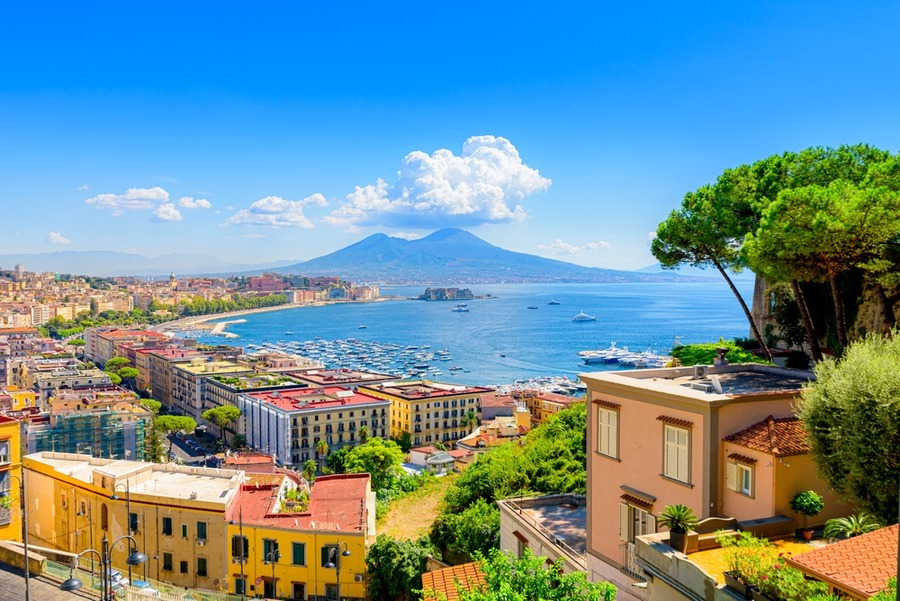
Finally, Relax on deck, reflect on a week filled with contrasts — cosmopolitan flair and unforgettable moments at sea. Disembark in Naples with memories of a refined Mediterranean journey where culture, nature, and luxury flowed seamlessly together.
—
A 7 Days Sailing Itinerary from Naples is more than a holiday — it’s an immersion into Italy’s soul.
From colorful island villages to dramatic cliffs and legendary coastlines, every day offers a new horizon, a new emotion, and an experience designed for those who seek elegance, authenticity, and freedom at sea.
Last but not least, apart from the 7 Days Sailing Itinerary from Naples, check more Suggested Itineraries Below:
7 Days along the Amalfi Coast (127 NM)Sail through one of the most breathtaking coastlines in the world — the Amalfi Coast. From the timeless beauty of Amalfi and Positano to the legendary islands of Capri, Procida, and Ischia, every stop reveals a masterpiece of nature, history, and Italian elegance.
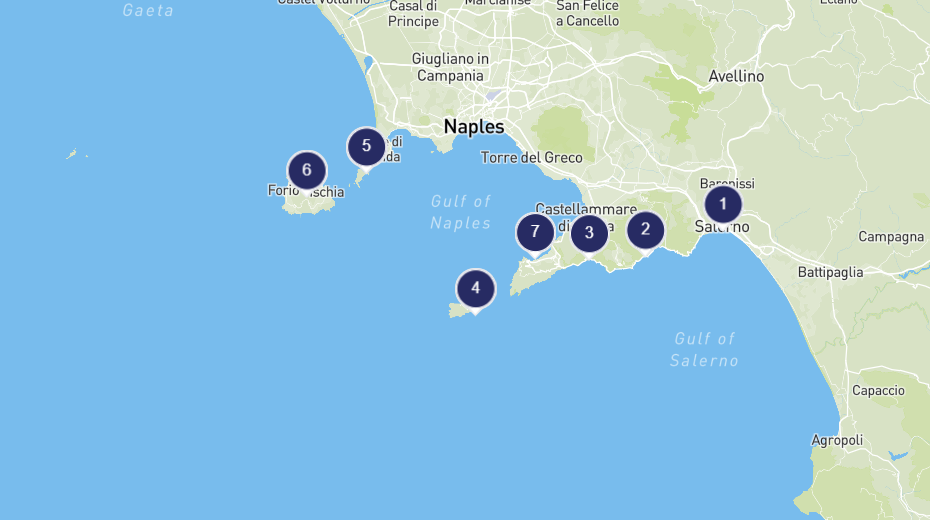
A 7-day catamaran charter along the Amalfi Coast is an invitation to experience La Dolce Vita at Sea.
Your journey begins in Salerno, where the sea sparkles beneath medieval towers. Sail west to the jewel of the coast, Amalfi, nestled beneath dramatic cliffs.
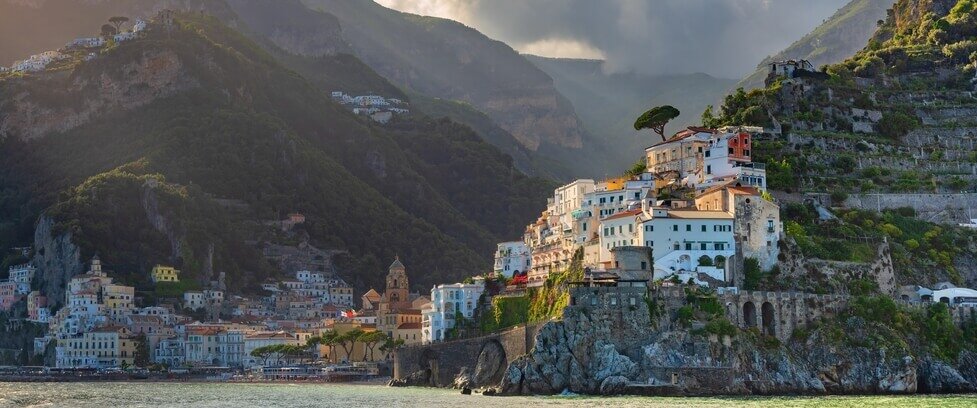
Wander through narrow alleys, visit the Cathedral of Sant’Andrea with its Byzantine façade, and explore the Arsenale Museum, once a medieval shipyard. As evening falls, dine by the marina, surrounded by warm lights and the sound of the waves.
Sail to Positano, the world-famous cliffside village that embodies Italian glamour.
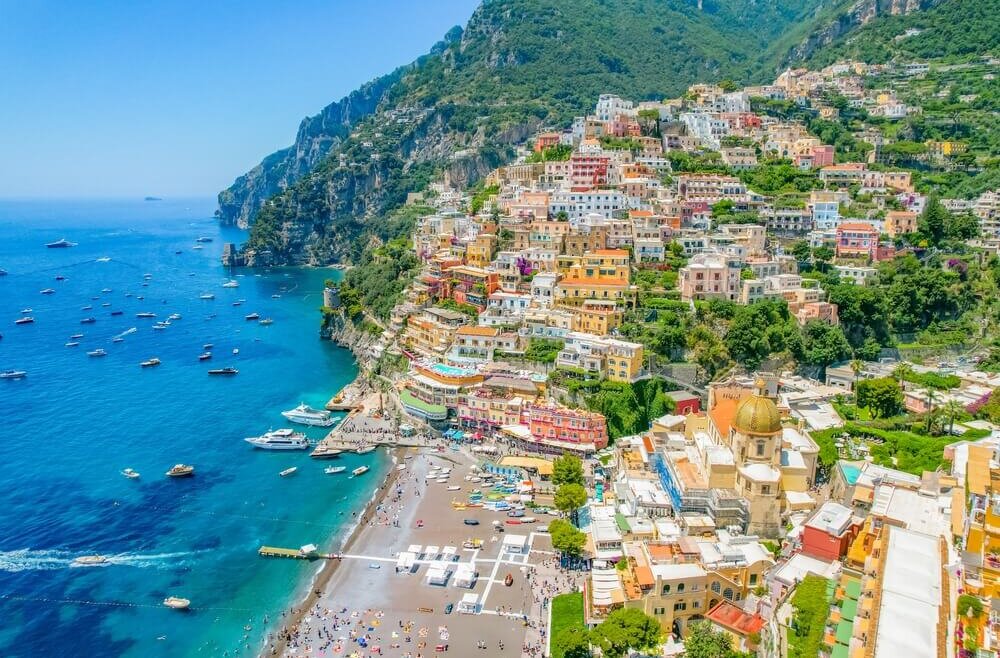
Admire the cascading pastel houses, explore the boutiques and galleries, and stroll along Spiaggia Grande or Fornillo Beach. Take the scenic Amalfi Drive, one of the most beautiful coastal roads in Europe, offering panoramic views that will leave you breathless.
Continue to the legendary island of Capri, a destination of eternal allure.
Cruise along Capri’s limestone coastline, stop at the Blue Grotto to see its striking blue light, and spend time in Capri Town browsing shops and elegant cafés. Toward evening, anchor near Marina Piccola and have dinner on board, with views of the Faraglioni rocks as the sun sets.
Sail north to Procida , Italy’s colorful hidden treasure and former Italian Capital of Culture.
With its pastel-painted fishing port, Marina Corricella, and tranquil atmosphere, Procida captures authentic Italian island life. Swim at Lingua Beach, visit the historic Palazzo D’Avalos, and savor fresh seafood in a seaside trattoria as boats sway gently in the harbor.
Sail to Ischia, the “Green Island” famed for its lush landscapes and thermal springs.
Relax at Maronti Beach, where hot springs bubble up from the sand, or visit the Aragonese Castle, a fortress rising from the sea and linked to the island by a stone bridge. End the day with a sunset aperitivo overlooking the Gulf of Naples — the perfect blend of history and indulgence.
Sail along the coast to Sorrento, a cliff-top town overlooking the Bay of Naples.
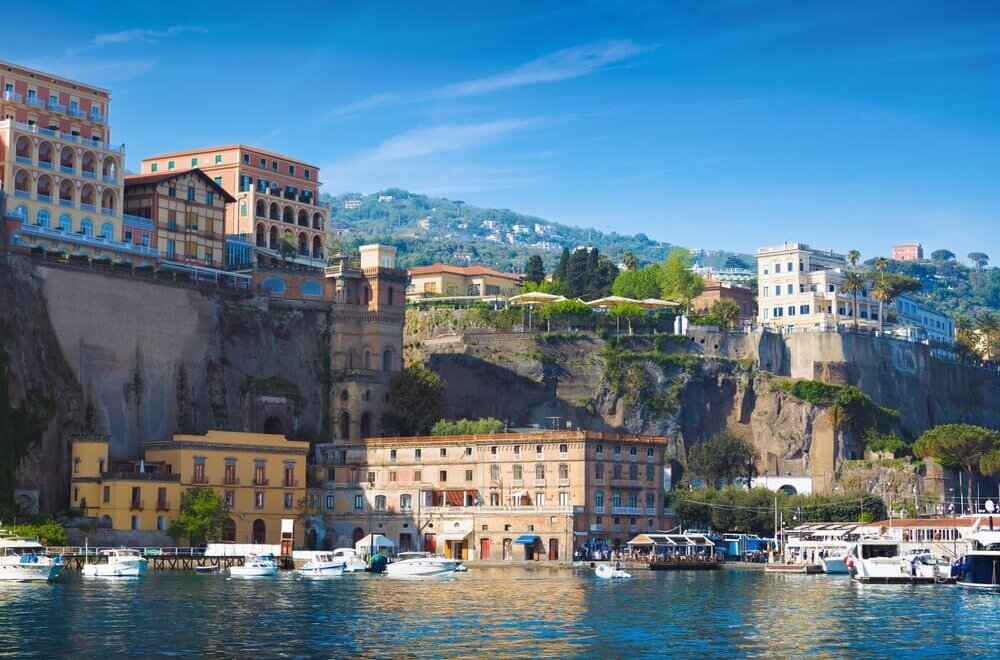
Stroll through the historic center, full of artisan shops and lemon-scented lanes, and visit the Church of San Francesco, a peaceful 14th-century sanctuary. Enjoy a relaxed evening in Piazza Tasso, savoring local pasta and Limoncello as mandolins play in the distance.
Your final sail brings you back to Salerno, where your Amalfi adventure began.
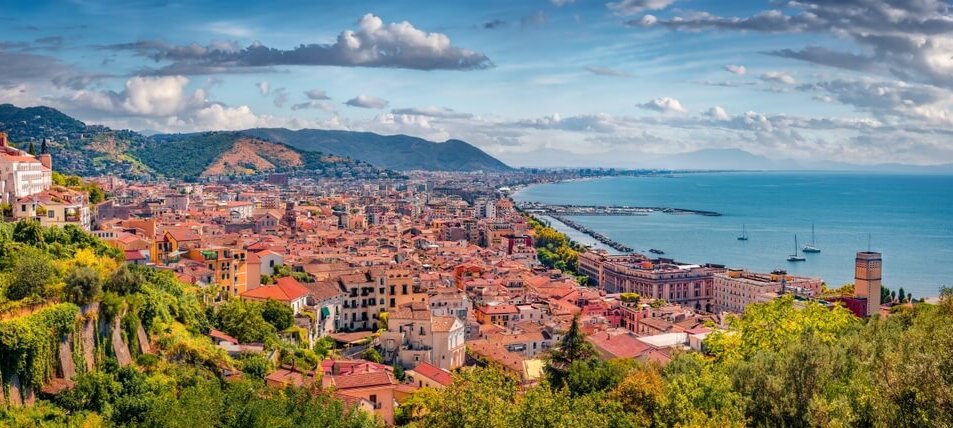
Climb to Castello di Arechi for panoramic views of the coastline, visit the Medieval Museum, or enjoy one last Italian espresso by the harbor before saying arrivederci. Reflect on a week filled with beauty, elegance, and the unforgettable charm of southern Italy.
—
Book your Amalfi Coast luxury catamaran charter today and sail through the beauty, romance, and style that only Italy can offer.
7 Days in Sardinia (135 nm)Sail away into a world of turquoise waters, wild landscapes, and Italian charm. The northeast coast of Sardinia — with its hidden coves, pink-sand beaches, and emerald bays — is one of the Mediterranean’s most breathtaking sailing destinations.
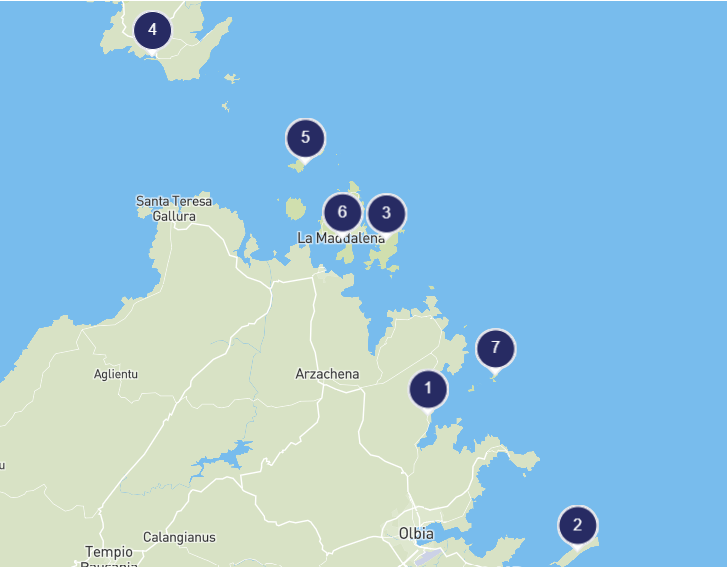
From the natural wonders of Tavolara and Caprera, to the cinematic cliffs of Bonifacio, and the untouched serenity of Budelli, this 7-day itinerary offers the ultimate blend of freedom, beauty, and luxury.
Depart from Portisco and set course for the majestic Tavolara Island, part of the protected marine area of Tavolara Punta Coda Cavallo.
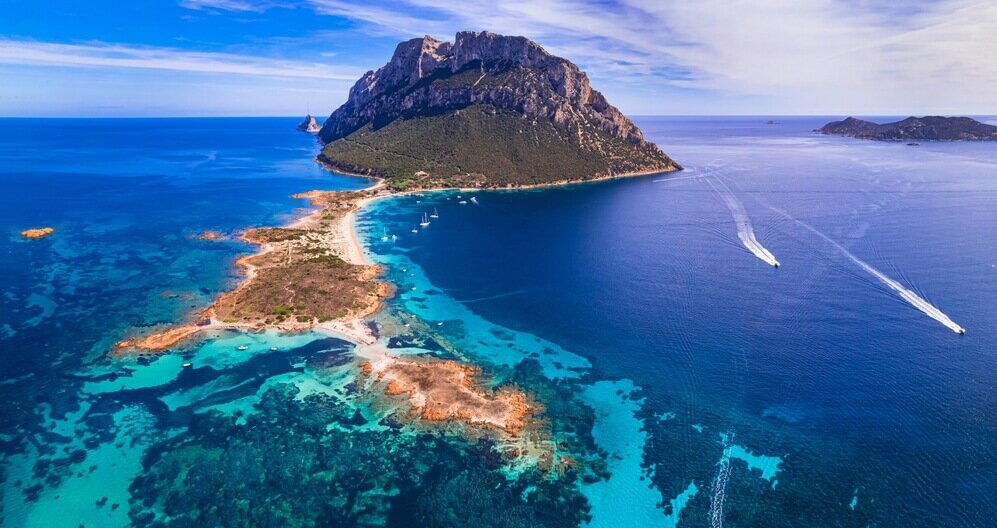
Dive into crystal waters teeming with marine life and relax on pristine beaches framed by rugged cliffs. It’s the perfect start to your Sardinian sailing adventure — wild nature, vibrant colors, and total tranquility.
Sail north to Caprera, an island of unspoiled beauty and historical charm, linked to the mainland by a narrow bridge.
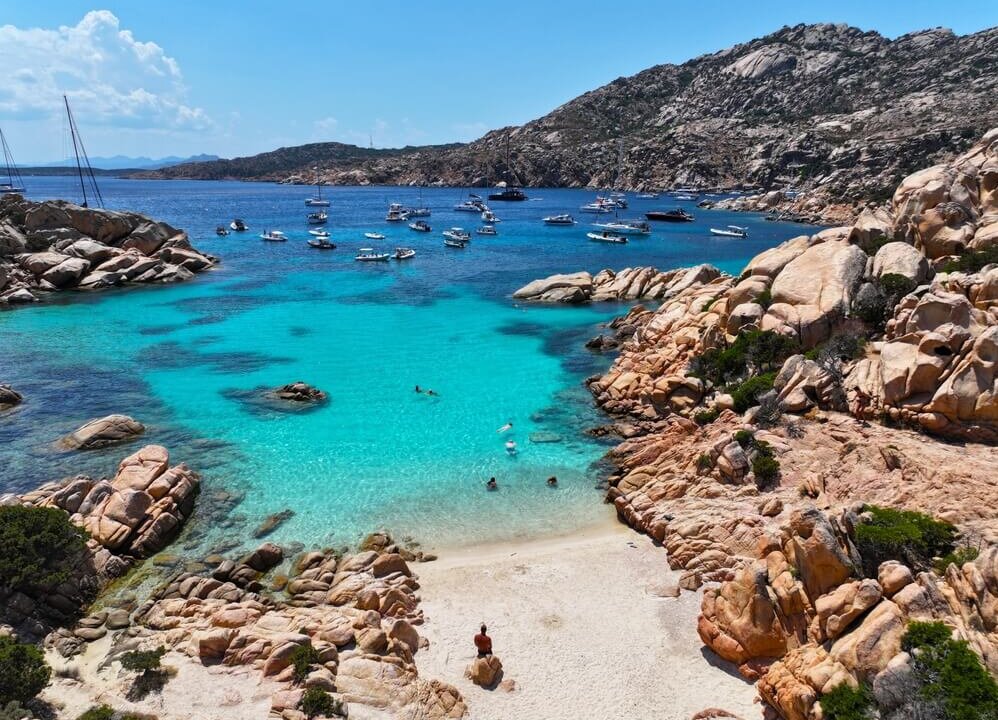
Visit the house of Giuseppe Garibaldi, now a museum, and stroll through the quaint fishing village for a glimpse of local life. Caprera’s beaches shimmer in emerald tones — perfect for swimming, snorkeling, and afternoon sunbathing in total peace.
Cross the sapphire waters to Bonifacio, perched dramatically on the white cliffs of southern Corsica.
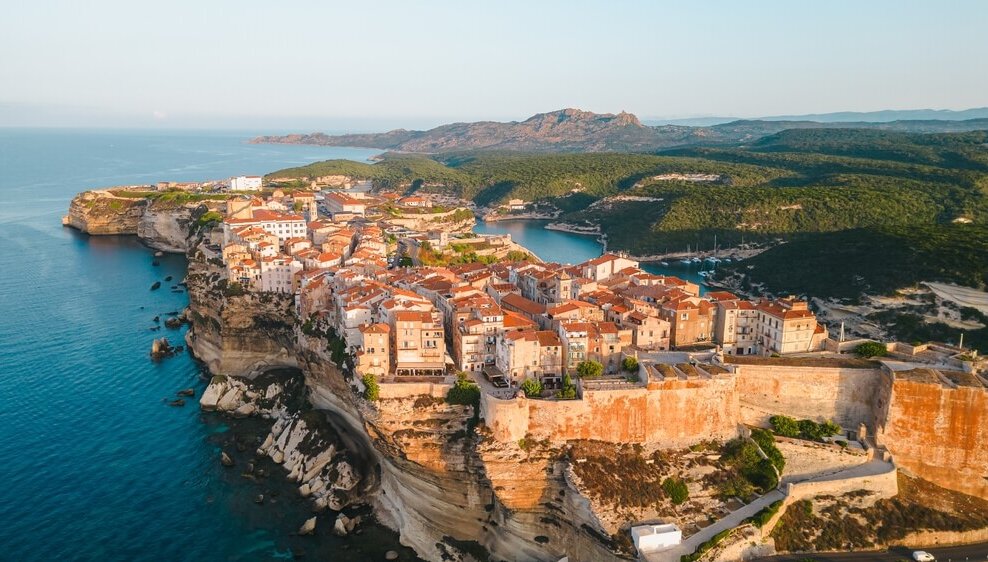
Explore its medieval citadel, stroll along the King of Aragon’s Stairway, and hike to Petit Sperone Beach, one of the Mediterranean’s most stunning stretches of sand. Bonifacio is pure drama — a fusion of natural wonder and French-Italian flair.
Sail into paradise at Budelli, part of La Maddalena National Park
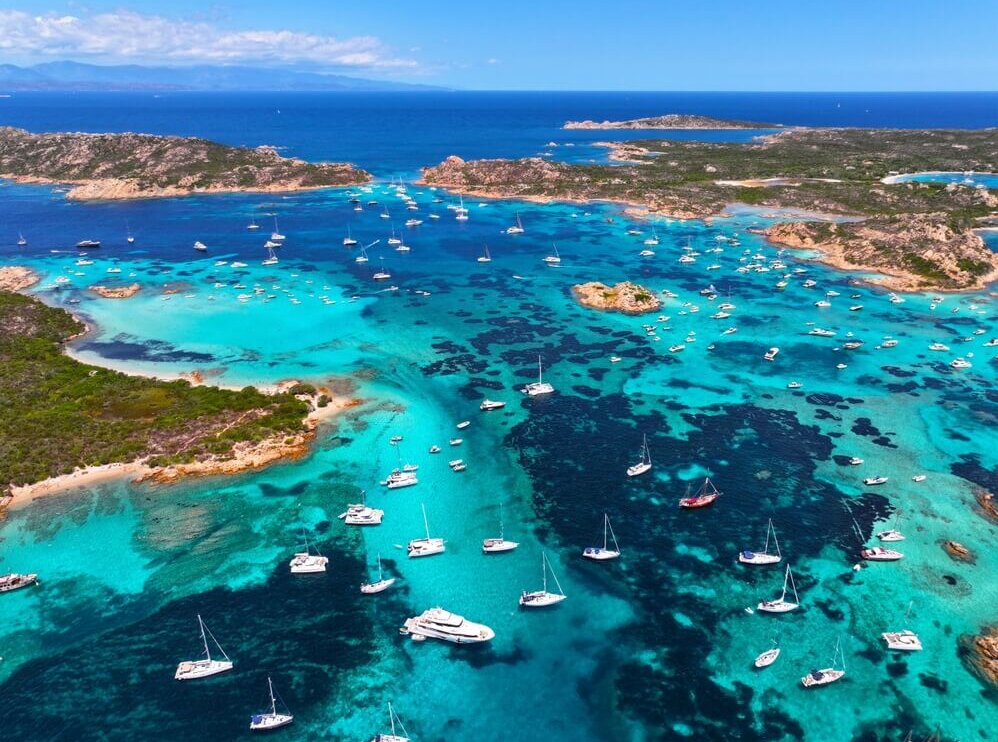
This small, uninhabited island is world-famous for its Pink Beach (Spiaggia Rosa), where crushed coral gives the sand a soft blush hue. Swim in turquoise lagoons, sunbathe on white sand, and feel completely disconnected from the world — nature at its purest.
Continue your journey to La Maddalena, the vibrant heart of the national park and a favorite among sailors.
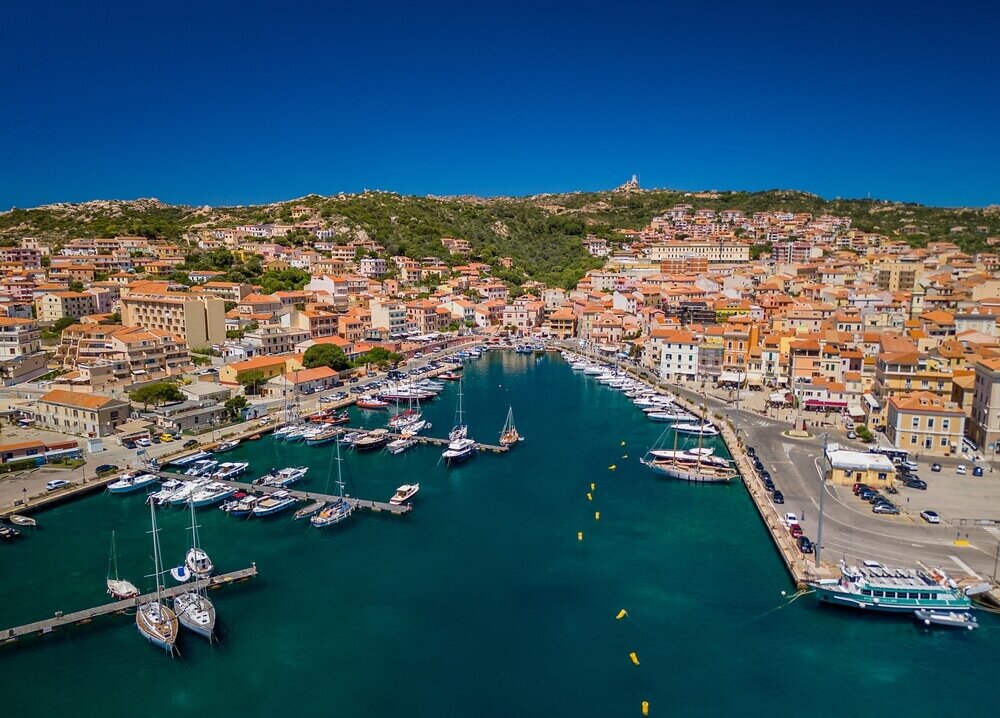
Discover Cala Spalmatore, Cala Francese, and Punta Tegge — postcard-perfect beaches where sea and sky merge into one. Visit the Nino Lamboglia Museum to learn about the island’s Roman maritime history, or simply enjoy a lazy afternoon soaking in the sun.
A short sail brings you to Mortorio, an uninhabited jewel near Porto Cervo.
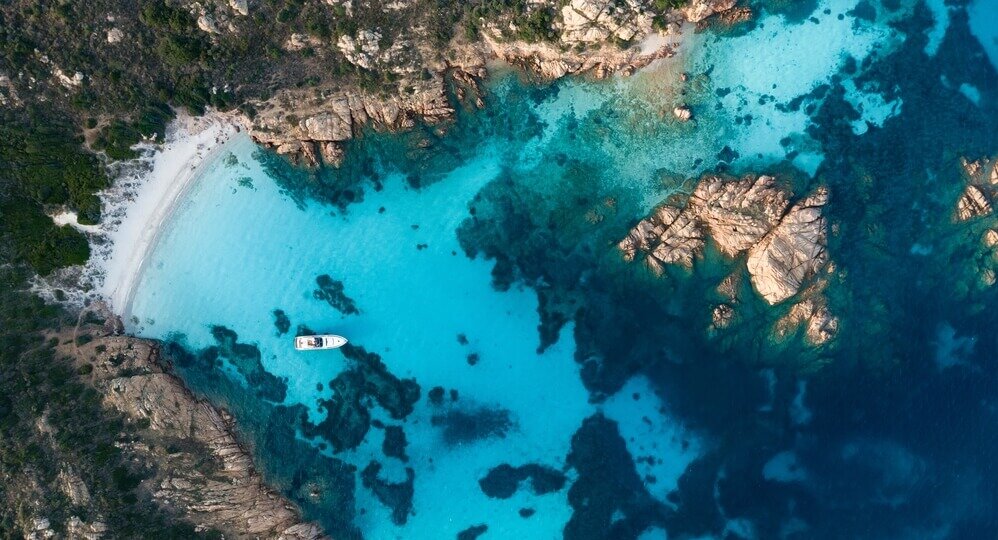
Its wild beauty, granite cliffs, and sparkling waters make it a hidden sanctuary for nature lovers. Swim at Cala di Ponente, explore secluded coves, and enjoy a private picnic on deck surrounded by endless blue.
Your final sail returns you to Portisco, but not before a stop at Spiaggia di Rena Bianca, a pristine beach perfect for a last swim in Sardinia’s iconic turquoise waters.
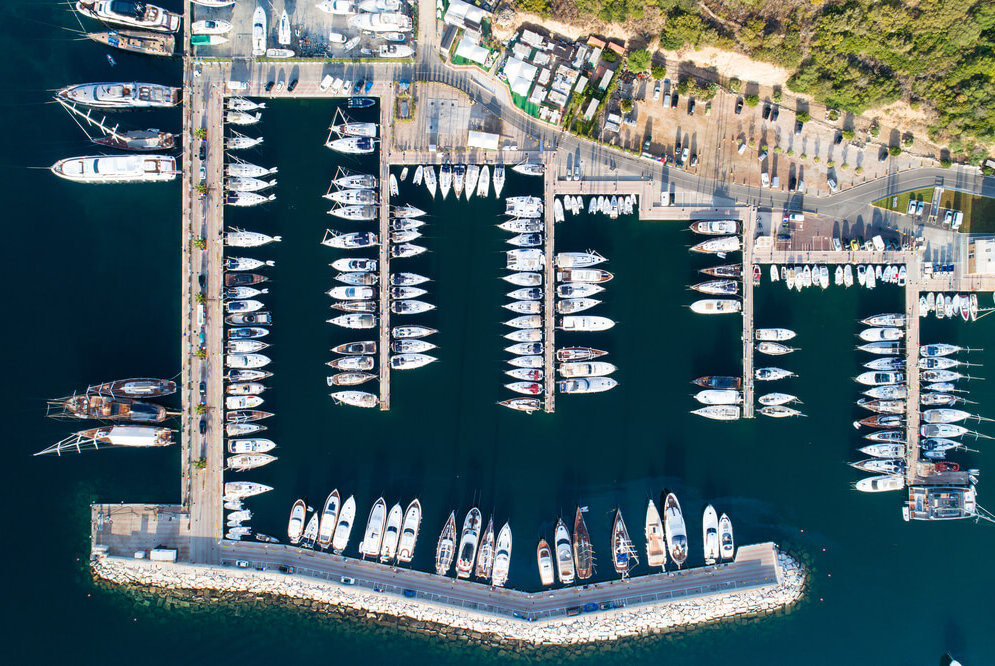
Spend the afternoon relaxing at a seaside restaurant and toasting to a week of unforgettable sailing — a journey filled with discovery, serenity, and endless beauty.
—
A 7-day catamaran charter through Sardinia and Corsica is an invitation to explore the most dazzling waters of the Mediterranean. From Tavolara’s protected marine paradise to Bonifacio’s limestone cliffs and Budelli’s pink sands, every day brings a new masterpiece of nature. Book your Sardinia luxury catamaran charter today and experience Italy’s most captivating coastline in absolute style.
Discover the secret Italian islandsJust off the northern coast of Sicily is the dazzling Aeolian archipelago, with something to offer in every season.
Italy truly has a timeless allure. The country has been through so much recently, so you could be forgiven for forgetting the features that make Italy one of the most geographically diverse and spectacular countries on earth.
Beyond the classic destinations like Venice, Florence and Rome — and even beyond the mainland ‘boot’ of Italy — there are gorgeous islands of various shapes and sizes that invite discovery.
And the Aeolian archipelago just off the northern coast of Sicily, is arguably the most bewitching of these. Here, overtourism has never really been a problem — and it certainly isn’t an issue at the moment.
The seven islands in the Aeolian chain include lush Salina, the jet-set playground isle of Panarea, and ethereal Stromboli, whose eponymous active volcano is a sight that has mesmerised travellers since ancient times. Gnarled, reddish lava formations grace many of these varied island coasts, sometimes jutting up right from the seafloor.
The Aeolian Islands are arguably the most pristine archipelago in the entire Mediterranean and are a UNESCO World Heritage Site too.
Go there by ferry from the Sicilian town of Milazzo or by flying into Naples or Palermo then taking any number of ferries from those cities to the islands, which include:

Stromboli’s volcano is rightly known as the “lighthouse of the Mediterranean” because every night, lava erupts from the top and streams down from the Sciara del Fuoco into the sea. It’s a truly awe-inspiring sight, especially when enjoyed from the outdoor deck of a night boat — it’s easy to find one in the little port of Ginostra.
The volcano is actually 8,000 feet tall, while only about 3,000 feet are above sea level. There are a couple of small villages and some decent black-sand beaches on the island, but basically, Stromboli is a giant volcano.
2. Sweet Salina

Two lumbering, extinct volcanoes form the spine of Salina. The taller of the two, Monte Fossa delle Felci, at 962 metres, is the highest peak in the Aeolian archipelago.
Unlike stern Stromboli, this is a lush and verdant isle. Its most famous products are capers and Malvasia, the sweet fragrant white wine made from dried grapes.
The main port is Santa Marina, but for the best vistas and most interesting places to stay, hop on a bus to the village of Malfa, where Hotel Signum has a pleasant al fresco restaurant and great spa. At the clifftop Capofaro Locanda & Malvasia, you may need to cross a vineyard get to your room — not necessarily a bad thing.
Movie buffs may also recognise Salina as the place where the classic 1994 movie ‘Il Postino’ was filmed.

Panarea is one of the smallest of the Aeolians. With its combination of stark geography and reputation for attracting A-listers like Uma Thurman and Giorgio Armani, it’s the Italian answer to Mykonos.
In fact, the whitewashed lanes of the main village are reminiscent of Greek island towns. It’s no surprise then that the before the ancient Romans were here, Panarea was settled by Mycenaean Greeks.
The breezy, eclectic Hotel Raya helped put Panarea on the map in the 1960s and is still the best place to stay.
Take a short boat trip to the deserted islet of Basiluzzo where you can swim in the clear blue waters. Above the water, Air Panarea offers helicopter tours of nearby Stromboli’s volcano.

At nearly 15 square miles, Lipari is the largest of the Aeolian Islands and bears evidence of settlements long before the arrival of ancient Greek colonists.
Its main town, also called Lipari, is the commercial capital of the Aeolians and feels like a more down-to-earth version of Capri. It’s also home to a must-see archaeological museum, known for its displays of some ancient shipwreck cargoes and the world’s largest collection of miniature ancient Greek theatre masks.
From the Quattrocchi (Four Eyes) lookout point, about two miles out of Lipari town, you can get an eyeful of dramatic scenery and a view across the water to the island of Vulcano.

When approaching tiny, remote Filicudi, don’t miss La Canna, a volcanic rock that juts up like a sentry 243 feet above sea level. It’s a fitting introduction to an island that truly feels like it fell off the map, which is a bit deceptive, as this mountainous green island has been settled since Neolithic times.
You can inspect the ruins of a seaside Bronze Age village at Capo Graziano, about a 10-minute ride south from the small harbour. For the best seafood try Ristorante La Canna, perched just above the harbour, or La Sirena in the even tinier Pecorini a Mare beach.

Ancient Greeks called it Therassia and ascribed it to Hephaestus, god of fire. But the Romans renamed the island Vulcano and thought it was the chimney of Vulcan, their god of fire. It’s hard to argue with that as you hike or drive past smoking sulphurous fumaroles on the way to the Gran Cratere della Fossa, the biggest of the stratovolcanic cones.
On the north end is little Vulcanello, product of an eruption in 183 BC and connected to the main island by an isthmus. It’s there, at Porto di Ponente, where you can indulge in a therapeutic mud bath and work in a swim at a broad black-sand beach.
For those who like to plan ahead, the best place to stay in Vulcano is the Therasia Resort — the views from there across the sea to Lipari will blow you away. The resort reopens in April.
euronews.travel